Structural Drying & Dehumidification in Torrance, CA
Air movers and low-grain dehumidifiers dry wall cavities, framing, and slabs to a verified standard, not just the surface, so the damage stops instead of hiding.
(424) 348-6818Tap to reach the 24/7 Torrance dispatch line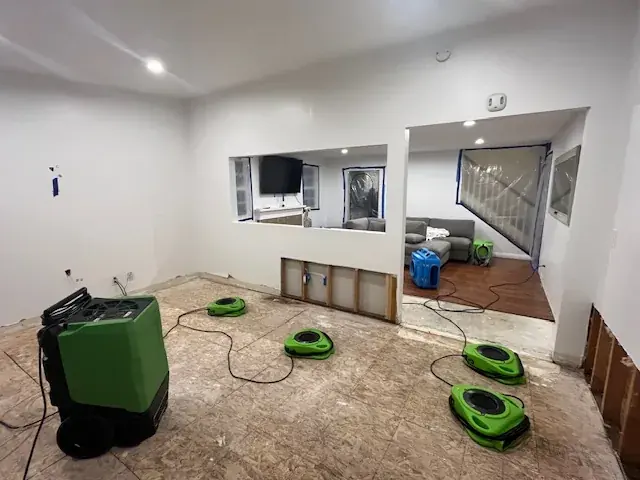
How Torrance structural drying is handled
What separates a finished dry-out from a cosmetic one is the order of the work, from the first pump-out to the last verified dry reading.
Rapid local response
The response team answers 24/7, and the nearest South Bay crew heads out the moment the call comes in, day or night, across Torrance.
IICRC S500 drying standard
Truck-mounted extraction, air movers, and moisture meters, so the drying is done to the IICRC S500 standard, not a mop and a fan.
Claim-ready documentation
The loss is documented with photos and daily moisture readings, the paperwork an adjuster needs to move a claim.
South Bay water experts
Storm runoff, slab leaks, hard-water heaters, and mid-century pipes, so the local pros know how water moves in a coastal Torrance home.
What to do so your Torrance home dries properly
Surface-dry is not dry, so the goal is to get real equipment on the structure quickly.
- Get the standing water out. Extract or mop up what you can so drying can begin.
- Do not close it up wet. Hold off on repairs until the framing and slab read dry, or mold can start.
- Call for verified drying. Air movers and dehumidifiers run, monitored to a dry standard, not a guess.
What does structural drying cost in Torrance, CA?
In Torrance, CA, structural drying typically runs $1,500 to $7,000, set by the materials that got wet, how saturated they are, and how many days of controlled drying it takes.
One area
- Air movers and a dehumidifier to a dry reading
Multiple rooms or a slab
- LGR dehumidifiers and mat drying, daily readings
Extensive saturation
- Long drying of slab, plaster, or hardwood
Documentation for your insurance claim
Most sudden water damage is covered. The restoration team can document the loss the way an adjuster needs it, though coverage depends on your policy, so it is worth checking with your own insurer. Want a number first? Try the Water Damage Cost Calculator for a Torrance range.
How structural drying & dehumidification is handled in Torrance
The same disciplined sequence on every job, so the water stops spreading and the drying is verified.
Call and dispatch
Whoever answers the Torrance line takes the call any hour, and the nearest crew heads out with truck-mounted extraction, air movers, and moisture meters.
On-site assessment
The tech who does the walkthrough maps the source and the full reach of the water, including what soaked into slab, subfloor, and wall cavities.
Extract and dry
The extraction crew pulls the standing water first, then air movers and LGR dehumidifiers dry to the IICRC S500 standard, not just the surface.
Verify and document
Most crews record moisture readings daily until the structure reads dry, and document the loss the way an adjuster needs it for the claim.
More on structural drying in Torrance
Extraction removes the water you can see. Structural drying removes the water you cannot, the moisture soaked into drywall, framing, subfloor, and the concrete slab. This is the step that decides whether a water loss is really over or just looks dry on the surface, and in Torrance the coastal marine layer keeps humidity high, so leaning on the air is not enough. Crews dry the structure to a measured target and prove it with readings.
Why the desert-dry look is a trap here
A floor can feel dry to the touch while the materials underneath are still saturated:
- Drywall and framing hold moisture behind a surface that feels fine
- A concrete slab gives up moisture slowly over days
- Coastal humidity keeps the air from pulling moisture out on its own
- Trapped moisture in a wall cavity can grow mold within a day or two
That is why crews measure instead of guess. Drying follows water extraction on every job, from a slab leak to a storm flood, and it is the same disciplined process each time.
How crews dry a structure
Crews build a drying system sized to the loss and monitor it daily:
- Set air movers to push air across wet surfaces and into open cavities
- Run low-grain refrigerant dehumidifiers to pull the moisture out of the air
- Use mat systems to dry a slab and specialty gear for hardwood and wall cavities
- Take daily moisture readings and adjust until the structure hits a dry target
Crews only pull the equipment when the readings confirm the structure is dry, not when it looks dry. That is what keeps mold from starting after the crew leaves and what an insurance adjuster wants to see documented.
Water damage that needs proper drying? Call and crews set a monitored drying system, day or night.
Call (424) 348-6818Why household fans fall short
It is tempting to set up box fans and open the windows, but that moves surface air without drying the structure, and in the humid coastal air opening the windows can add moisture.
- Household fans dry the surface while the cavity stays wet
- Commercial dehumidifiers actually remove the moisture from the air
- Only monitored drying reaches a slab, plaster, or old framing
The EPA mold cleanup guide stresses drying wet materials within 24 to 48 hours, and the CDC covers why damp building materials must be dried quickly.
Dry to a reading, not to the calendar
Materials dry at different rates, so a fixed number of days is a guess. Crews take daily moisture readings and only call it done when the structure hits a safe, measured target.
Structural Drying & Dehumidification across Torrance and the South Bay
Coverage runs across every Torrance ZIP, day or night.
See every neighborhood and ZIP coveredLocal crews cover the whole city, day or night, across Torrance and the South Bay.
Coverage runs across Torrance, Redondo Beach, Lomita, Gardena, Carson, Palos Verdes, and the South Bay.
Related restoration services
Structural drying questions, answered
Water in your home right now?
Do not wait for the FAQ. A local Torrance crew is standing by, any hour.
(424) 348-6818 Call the Torrance lineHow long does structural drying take?
Most homes dry in 3 to 5 days, longer for a saturated slab, plaster, or hardwood. The coastal marine layer keeps humidity up, so crews run commercial dehumidifiers and monitor daily rather than trusting the air.
Why not just use fans and open windows?
Fans move surface air but do not dry a wall cavity or slab, and opening windows in humid coastal air can add moisture. Low-grain dehumidifiers actually remove the water so the structure dries and mold cannot start.
How do you know when it is dry?
Crews take daily moisture readings with meters and only pull the equipment once the readings confirm the structure has reached a safe, dry target. Crews document those readings for your records and your carrier.
Is the equipment loud or disruptive?
Air movers and dehumidifiers run continuously and do make noise, but they are what dries the structure fast. Turning them off to save the noise extends the drying and risks mold, so crews keep them running through the job.
Does drying stop mold from growing?
Fast, thorough drying is the single best way to prevent mold, because mold needs moisture to start. Reaching a verified dry reading within a couple of days is what keeps a wet wall from becoming a mold problem.
Will insurance cover the drying equipment?
Yes, monitored drying is a standard, covered part of a water damage claim. Crews document the equipment, the days, and the readings and bill your carrier directly for the covered work.
A Torrance structural drying crew is standing by
Water sitting means damage spreading. Call Highly Skilled Water Damage and a local crew heads out across Torrance and the South Bay, day or night.
(424) 348-6818Call now, a South Bay team picks up day or night